
3D product visualization eliminates the uncertainty that causes abandoned carts and returns. When customers can examine products in detail before buying, they purchase with confidence.
About 3D Product Visualization
Online shoppers cannot touch, hold, or examine products the way they would in a physical store. Static images leave gaps. Customers hesitate, abandon carts, or buy and return when reality doesn't match expectation.
Interactive 3D visualization solves this by giving customers complete control over how they view your products. They can rotate, zoom, and inspect from any angle — examining stitching on a bag, the clasp on a bracelet, or the texture of a material. This level of detail builds the confidence needed to complete a purchase.
Our 3D visualizations are built for performance. Models load quickly, render accurately across devices, and integrate seamlessly into your existing product pages. The result is a better customer experience that translates directly into improved conversion rates and reduced returns.
Device-Agnostic Performance
Smooth 3D interaction on desktop, tablet, and mobile — no app required.
Accurate Material Rendering
Realistic textures, reflections, and finishes that match your physical products.
Optimized Load Times
Compressed assets that load fast without compromising visual quality.
Flexible Integration
Embed in product pages, landing pages, or standalone experiences.

Products That Benefit Most
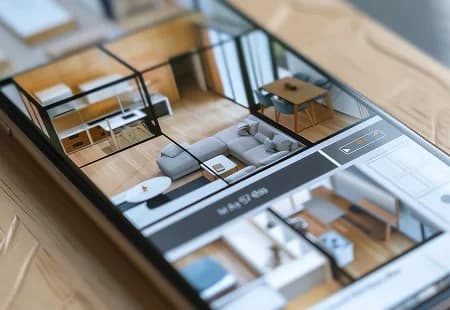
3D visualization delivers the highest impact for products where detail, craftsmanship, or form factor significantly influences the purchase decision. Jewelry, watches, furniture, fashion accessories, electronics, and luxury goods see the strongest conversion improvements. If your customers need to understand how something looks from multiple angles — or how materials and finishes appear in different lighting — 3D visualization removes the guesswork.
What's Included
High-fidelity 3D models built from CAD or reference materials
Real-time rotation, zoom, and inspection controls
Physically-based rendering (PBR) for accurate materials
Responsive design that works across all screen sizes
Performance optimization for fast initial load
Analytics integration to measure engagement
Hotspot annotations for feature callouts
AR-ready assets for mobile try-on experiences
Frequently Asked Questions
What file formats do you need to create 3D models?
We can work from CAD files (STEP, IGES, OBJ), high-resolution reference photos, or the physical product itself. CAD files produce the most accurate results. For products without existing 3D data, we use photogrammetry or manual modeling based on measurements and reference images.
How long does it take to create a 3D visualization?
A single product typically takes 1-2 weeks from receiving source materials to delivery. Complex products with intricate details or multiple material variations may take longer. For catalog-scale projects, we establish production workflows that significantly reduce per-unit timelines.
Will 3D slow down my website?
No. We optimize every model for web performance. Initial load times are typically under 3 seconds on standard connections. The 3D viewer itself uses progressive loading, displaying the model quickly and refining detail as additional data loads in the background.
Can I use the same 3D assets for AR experiences?
Yes. We build assets in formats compatible with both web 3D viewers and mobile AR (iOS Quick Look, Android Scene Viewer). One production process, multiple use cases.
